UNIT _____: Light and Pigments Name: _____________________
Essential Idea(s):
Specific wavelengths of light activate photosynthetic pigments.
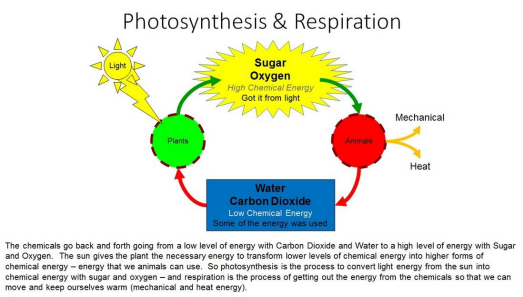
2.9.U1: Photosynthesis is the production of carbon compounds in cells using light energy
∙ Define photosynthesis.
∙ State the chemical equation for photosynthesis.
2.9.U5: Energy is needed to produce carbohydrates and other carbon compounds from carbon dioxide.
∙ State the energy conversion that occurs during photosynthesis.
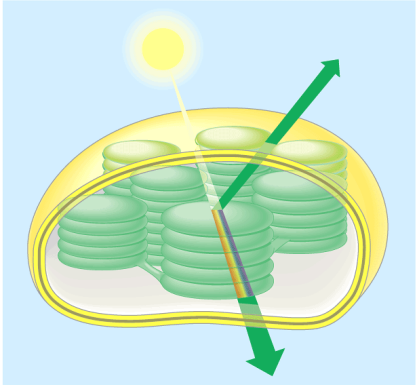
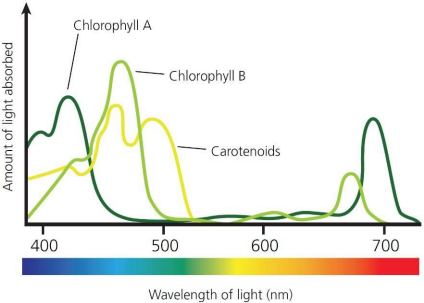
2.9.U3: Chlorophyll absorbs red and blue light most effectively and reflects green light more than other colours ∙ Define pigment.
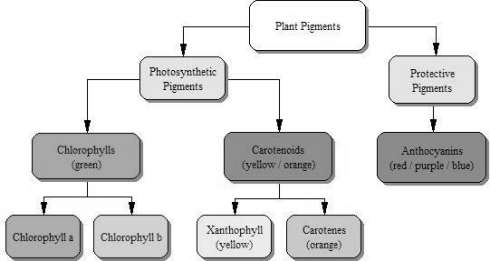
∙ State the primary and accessory pigments found in chloroplasts.
∙ Explain why plants are green.
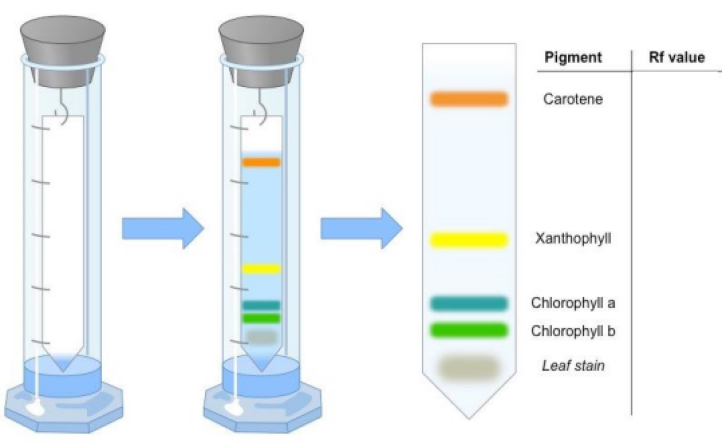
2.9.S2: Separation of photosynthetic pigments by chromatography (Practical 4)
∙ Outline the process of separating pigments using chromatography
∙ Calculate the Rf value for pigments using pigment chromatography.
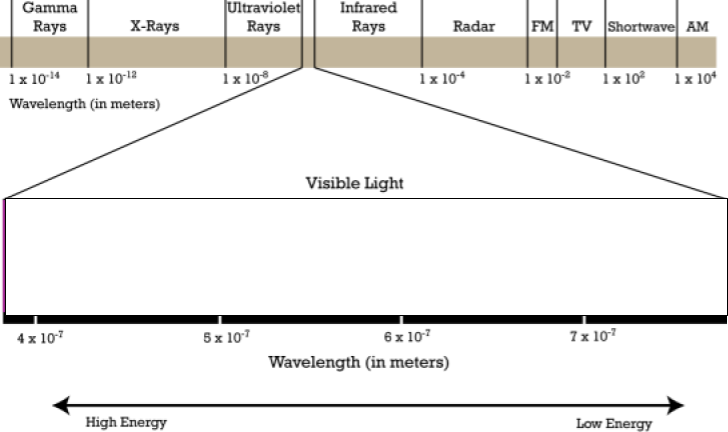
2.9.U2: Visible light has a range of wavelengths with violet the shortest wavelength and red the longest (400-700 nm = visible light. Don’t need to know specific wavelength for each color)
∙ Define visible light.
∙ State the relationship between wavelength and energy.
∙ State the range of wavelengths that fall within the visible spectrum.
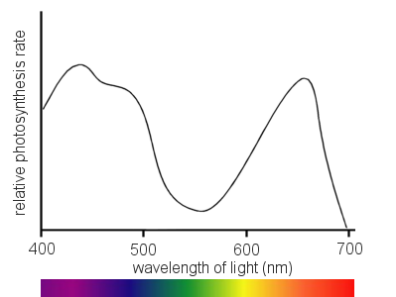
2.9.S3: Drawing an absorption spectrum for chlorophyll and an action spectrum for photosynthesis
∙ Distinguish between an action spectrum and an absorption spectrum.
∙ Describe the shape of the curve for an absorption spectrum.
∙ Describe the shape of the curve for an action spectrum.
Energy Conversion in Visible Spectrum
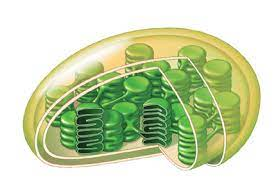
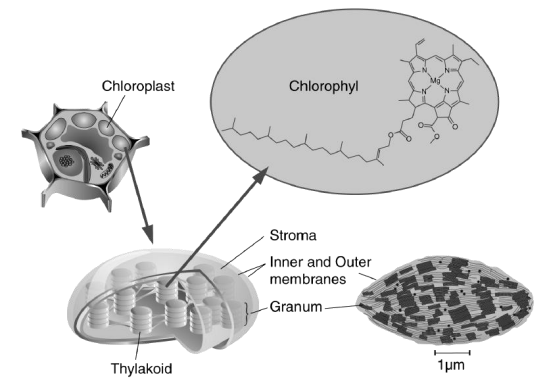
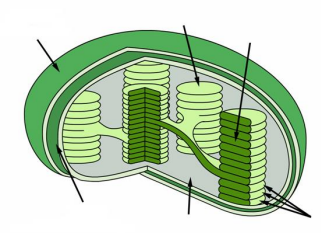
Chloroplasts
Pigments
Chromatography
Absorption Spectrum
Action Spectrum